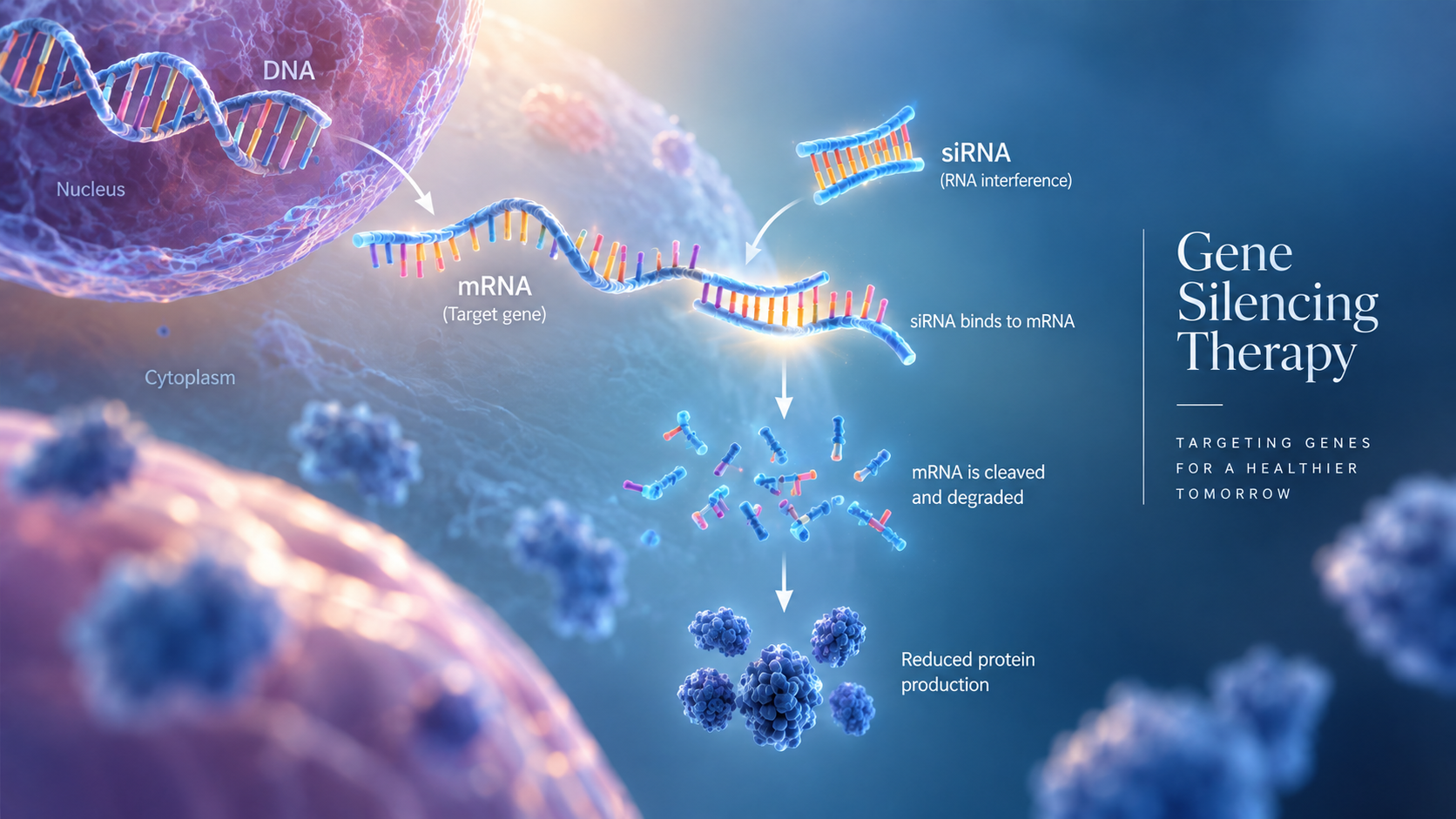
At the Indian Institute of Integrative Oncology (IIIO), we continuously evaluate emerging precision therapies that target disease at the genetic level. One such advanced technology is Gene Silencing, an individualized therapy based on RNA interference (RNAi) science.
Gene Silencing is a personalized molecular therapy designed to selectively silence specific genetic targets involved in:
→ Cancer cells
→ Chronic viral infections
→ Lyme disease and co-infections
This approach uses small RNA-based molecules that help regulate or reduce the expression of specific harmful genes.
Unlike chemotherapy, which broadly affects rapidly dividing cells, RNAi therapy works at the gene-expression level, aiming for higher precision.
→ A patient’s blood sample is analysed in a specialized molecular laboratory.
→ Specific gene targets associated with the disease are identified.
→ Custom-designed RNA molecules are developed to interfere with those targets.
→ The therapy is administered intravenously under medical supervision.
→ The goal is to reduce the activity of genes essential for abnormal cell survival or pathogen persistence.
→ Solid tumors
→ Hematological malignancies
→ Patients seeking integrative, precision-based options
→ EBV
→ HPV
→ HBV / HCV
→ HSV
→ Other chronic viral states
→ Including Borrelia, Bartonella, Babesia and related strains.
→ Final eligibility depends on clinical evaluation and laboratory confirmation.
→ Recent chemotherapy, radiotherapy, or strong cytotoxic treatments may require a waiting period.
→ Active infection markers must be confirmed through laboratory testing.
→ Blood transfusions or certain immune therapies may delay eligibility.
→Not recommended during pregnancy or breastfeeding.
→Each patient is individually evaluated to ensure safety and appropriateness.
Given as a controlled intravenous infusion. Pre-medications may be used to reduce risk of allergic or inflammatory reactions. Patients are monitored during and after infusion. The procedure is performed only in registered medical facilities.
Most reported side effects are mild and temporary:
→ Headache
→ Fatigue
→ Flu-like symptoms
→ Temporary discomfort at tumor site (in cancer cases)
In patients with high tumor burden, there is a theoretical risk of tumor lysis syndrome, and appropriate medical precautions are taken.
Cancer patients are typically re-evaluated every 3–4 months. Viral/Lyme patients are re-tested after several months to assess response. Treatment spacing depends on diagnosis and clinical response.
Based on reported clinical experience:
Cancer patients: Approximately 78% showed clinical benefit (partial response, complete response, or stable disease).
Viral infections: Approximately 91% reported positive clinical outcomes.
Lyme disease: Approximately 95% showed improvement in documented cases.
Individual results may vary.
→ Precision molecular therapy
→ Immune modulation
→ Nutritional and metabolic support
→ Hyperthermia
→ Mistletoe therapy
→ High-dose IV Vitamin C
→ Biofrequency modulation
Each patient receives a customized integrative protocol, not a one-size-fits-all plan.
Gene Silencing is a personalized molecular therapy and should only be administered under qualified medical supervision. It is not a substitute for standard oncological care but may be used in integrative settings when clinically appropriate.
All treatment decisions are made after careful review of medical history, laboratory findings and risk assessment.